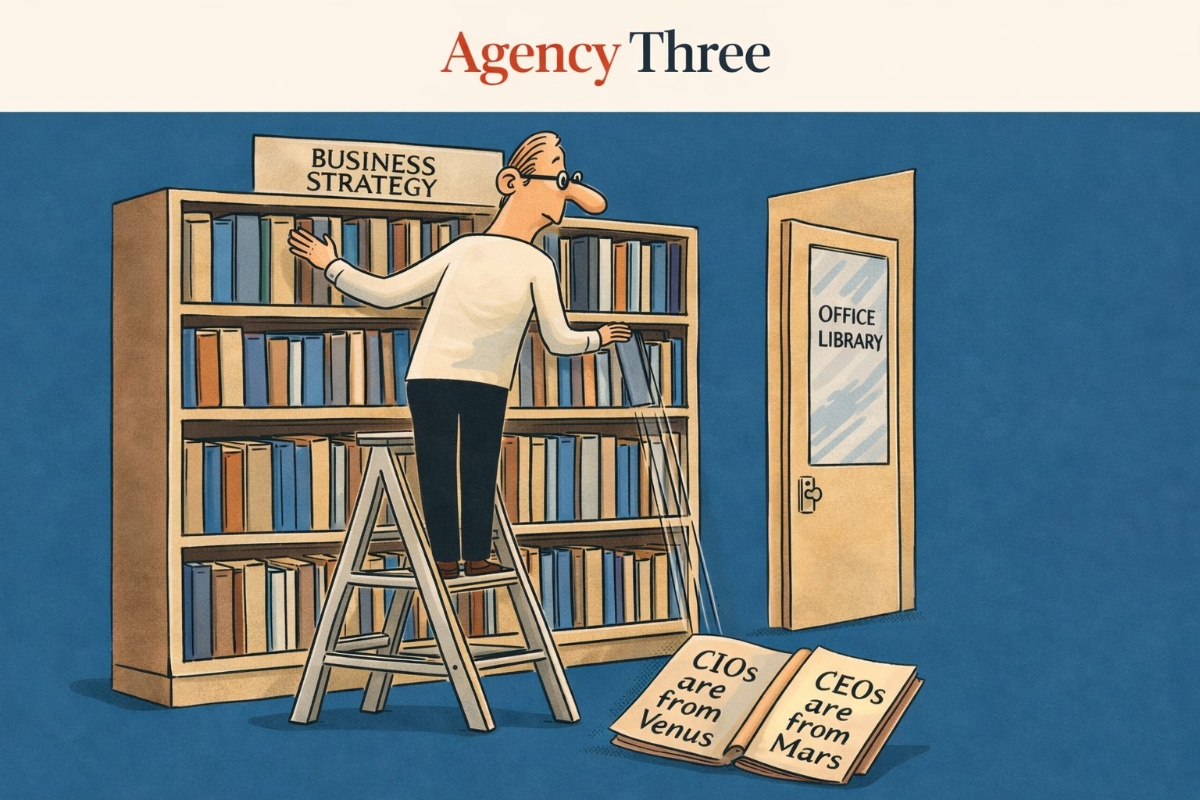
Every resource in our library is mapped to one or more of our core EQ or IQ competencies, making it easy for leaders to focus on the areas that matter most to their development. We continually refresh the collection to reflect the latest thinking in business, technology, and modern leadership.
Curated specifically for Digital and Technology Executives, the library includes over 1,000 high-quality resources, including articles, podcasts, audiobooks, TED Talks, books, and leadership programmes. Each item aligns to our proprietary leadership diagnostic model, built around 10 leadership competencies (6 EQ and 4 IQ).
To explore, simply select the competency you want to strengthen and click "Learn more" to access the full set of related resources. You can also browse by format using the icons above to filter quickly by your preferred media type.

The ability to influence, persuade, or convince others to adopt their concepts, ideas and arguments. It involves the use of persuasive techniques, presentations or negotiation skills to achieve desired results.
Decisiveness under pressure requires a high-ambiguity tolerance. When people tolerate, or even appreciate ambiguity, they demonstrate the ability to synthesize and visualize what potential success could look like. Deconstructing what success looks like: asking "why?" until you get to the core of the issue. Avoiding jumping to solutions until you have a clear understanding of the cause/effect relationships.
Identifying opportunities to simplify products, organizational structures, business processes, and information systems to save costs while strengthening core capabilities and increasing customer focus.
The ability to influence and enthuse others to build a solid platform for change through personal advocacy, vision and drive, ensuring people have the right resources, knowledge, and support so that they can be successful. Embeds a positive culture of change.
Authentic people leaders have the ability to build relationships in different cultures and environments in order to create high-performing and collaborative teams that come together towards a shared goal. Effective leaders take a personal interest in the long-term development of their teams.
The ability to recognise, understand and manage our own emotions while also recognising, understanding, and influencing the emotions of others. Being aware that emotions can drive our behaviour and impact people (positively and negatively) and learning how to manage those emotions.
The ability to deploy all of the modern technology capability available in order to generate value and help your business achieve its business goals. Staying in tune with the speed of technological change, align fast-changing trends and technologies that can influence and disrupt business models.
Ensuring technology initiatives and aligned to business outcomes by paying attention to what creates results and value for the business. Delivering programs that scale to drive improvement across key operational and financial metrics.
Enterprise Risk Management is about effectively managing IT risk with integrated risk management solutions, responding in real time to emerging threats and confidently embracing the benefits of digital transformation. Those that don't manage risk effectively, face business disruption, reputational and legal consequences as well as a fundamental barrier to innovation.
Enterprise IT leadership is about Planning and deploying IT in the best interests of the enterprise rather than a single business unit or function, while still maximising overall business value. The enterprise has greater requirements for availability, compatibility, reliability, scalability, performance, and security but it's also about a strategy for increasing the business relevance of the IT function, operating as a service-based business.